
For nearly three decades, Tim O’Donnell has had a front-row seat to one of Virginia’s fastest-growing regions.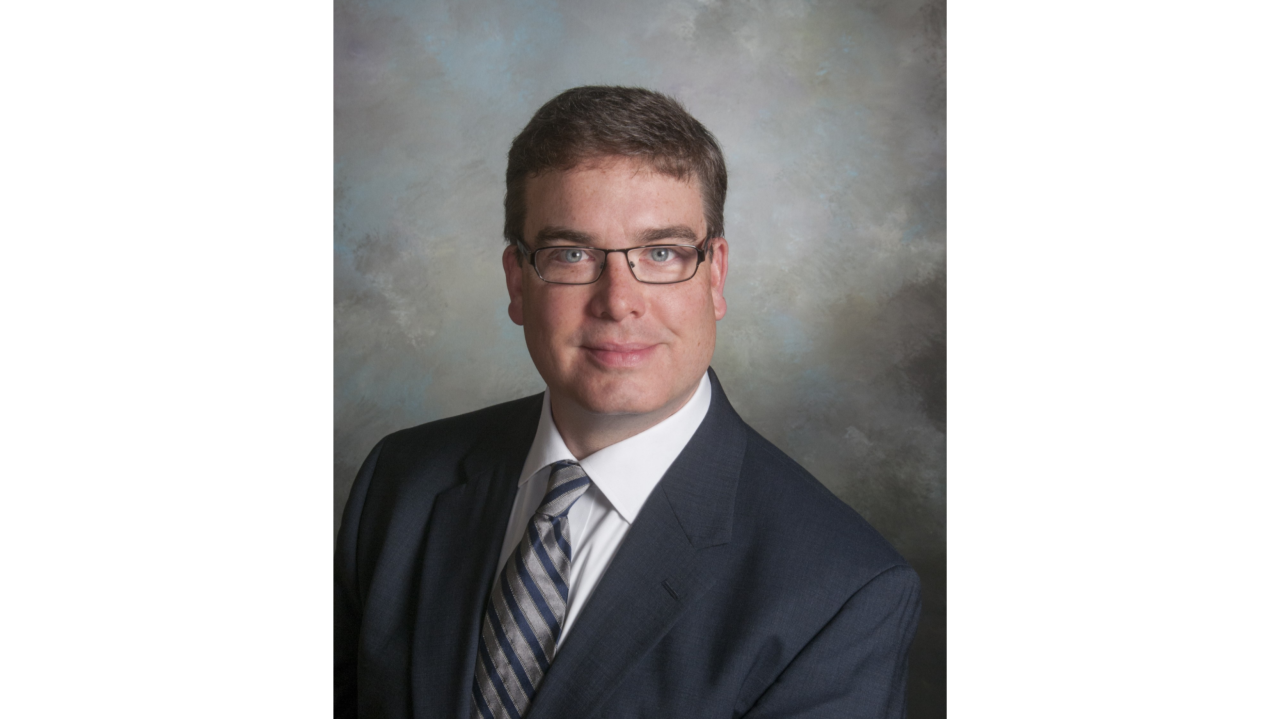
When he arrived at what is now the University of Mary Washington 27 years ago as a young faculty member, downtown Fredericksburg was still finding its footing. The surrounding counties also were growing, but many of the assets and partnerships that now define the region were only starting to emerge.
Today, as UMW’s provost and a board member of the newly rebranded Virginia’s Innovation Crossroads Alliance (formerly the Fredericksburg Regional Alliance), he sees a region that has matured into an increasingly important economic engine for the state.
“I’ve seen significant change,” he said. “One can’t ignore the fact that we are literally 50 miles north and south of the state capital and the nation’s capital. That geographic position comes with a variety of privileges and opportunities, and this region has taken advantage of them.”
That strategic location is one reason O’Donnell believes the updated name and brand accurately reflects where the region is today – and where it’s headed.
“The notion of crossroads makes a lot of sense,” he said. “There are so many things that converge here.”
Those converging forces include major transportation networks, federal and military installations, higher education, growing technology sectors, and an increasingly skilled workforce. Together, they create an ecosystem that is attracting investment and generating opportunity across the City of Fredericksburg and Stafford, Spotsylvania and Caroline counties.
A role for UMW in the ecosystem
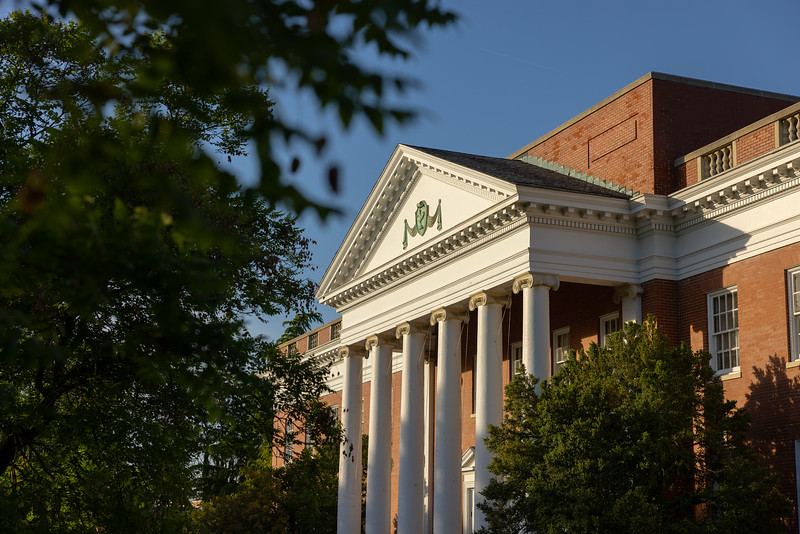
As the region’s only four-year university and among its largest employers, as well as host to Virginia’s Innovation Crossroads on its campus, UMW plays both a straightforward and evolving role in that ecosystem.
“We’re an anchor institution whose history goes back more than 100 years,” O’Donnell said. “We generate significant economic opportunity, but – perhaps even more importantly – we’re providing the workforce of the future.”
About half of UMW students come from within a 30-mile radius of campus, and many remain in the region and Virginia after graduation. That creates a direct connection between the university’s educational mission and the region’s economic success.
“We have a special responsibility to the communities around us,” O’Donnell said. “We need to offer the educational programs that are in demand as the region continues to grow.”
Outside campus borders, that responsibility led to the opening two years ago of Academy of Technology and Innovation, a regional lab school that brought together multiple school divisions to create new student pathways, which include graduating with industry certifications. O’Donnell cites it as an example of the kind of regional collaboration that Virginia’s Innovation Crossroads seeks to promote.
Other ambitious projects could further strengthen the region’s competitiveness, including a proposed medical school developed in partnership with Mary Washington Healthcare, headquartered just across the street. The proposal addresses both workforce needs and quality-of-life concerns.
“If you’ve lived in this area for any length of time, you know how challenging it can be to find a primary care provider,“ he said. “Healthcare is critical. This region will reach its limit if those needs continue and aren’t addressed.”
Unlike traditional research-focused medical schools, UMW’s proposed school, with a target opening date of 2029, would emphasize primary care, clinical practice, and service to communities across Virginia. O’Donnell sees a natural connection between that mission and the university’s liberal arts foundation.
“The doctors we want are people who can communicate effectively, solve problems, think creatively, and understand the human beings sitting across from them in the exam room,” he said. “Those are exactly the kinds of skills the liberal arts help develop.”
Enriching the communities
At the same time, the university is investing in future-focused programs designed to meet emerging workforce demands. One example is its new master’s program in artificial intelligence for business, developed through collaboration among faculty in business, mathematics and computer science.
“There is both promise and peril in artificial intelligence,” O’Donnell said. “We think it makes sense for a liberal arts institution to take AI seriously while also helping students and business leaders think about the ethical and human dimensions that come with it.”
Those efforts reflect a broader philosophy that has guided the university in recent years: preparing students not just for their first job, but for careers that will evolve over decades.
“We want our students to be career-ready,“ O’Donnell said. “At the same time, we want them to be lifelong learners who can adapt to a rapidly changing world.”
That’s why the university’s commitment to the region comes to life in other ways as well. O’Donnell points to projects such as the planned theater (coupled with a new bachelor’s of fine arts degree), renovations to arts facilities, and stewardship of cultural assets such as the James Monroe Museum as investments that strengthen quality of life throughout the region.
“Universities embedded in communities have a responsibility to enrich the cultural and artistic life of those communities,” he said.
That combination of workforce development, healthcare, innovation, culture, and collaboration is what excites O’Donnell most about the future of Virginia’s Innovation Crossroads.
As a board member, he credits the leadership of former Alliance President Curry Roberts and current President Tom Scott for helping build momentum at a pivotal moment.
“We’ve had very competent leadership, and I think it’s a really exciting and momentous time,” O’Donnell said. “It’s rewarding to see what many hands working together can do for a region.”
For O’Donnell, that’s ultimately what Virginia’s Innovation Crossroads represents as a shared vision for a region that understands its strengths and is prepared to build on them.
“We’re right in the heart of it all,” he said. “And there’s a tremendous amount of opportunity ahead.”