
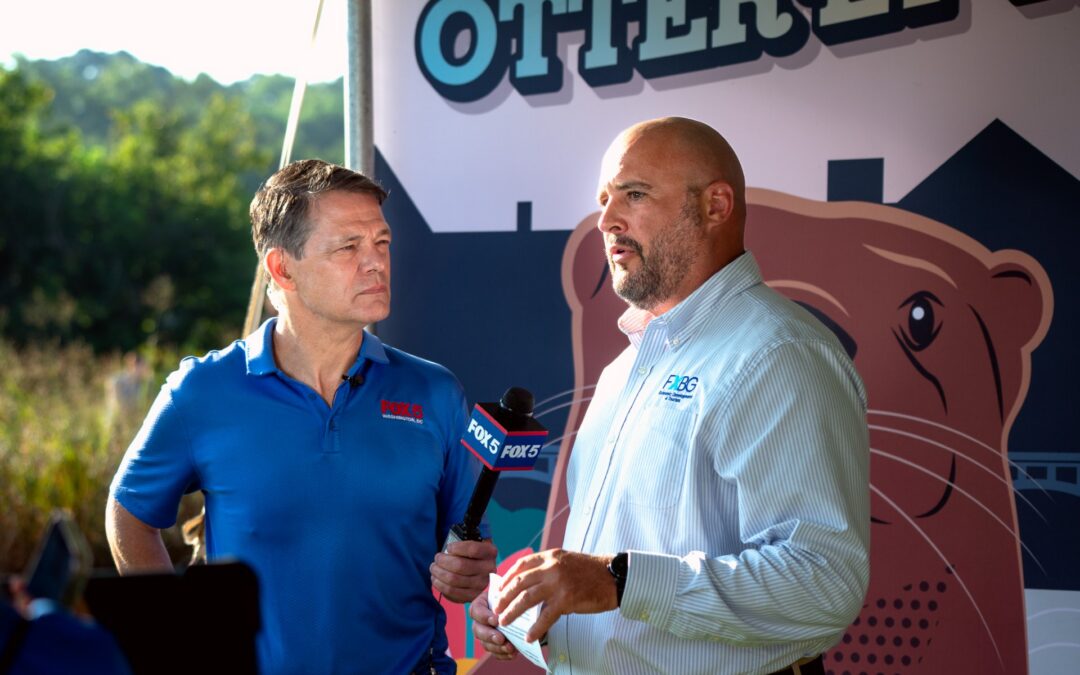
Josh Summits knows what it means to work within the lines.
As economic development director for the City of Fredericksburg, his canvas is just 10.5 square miles: landlocked, largely developed and surrounded by much larger counties.
That doesn’t leave much room for sprawling industrial parks or hundreds of acres of new greeenfield development. Instead, it requires looking at what Fredericksburg already has and asking a different question: What could this become?
Summits finds that a major part of the appeal for his position with the City of Fredericksburg.
“What excites me about this position is the core focus on redevelopment,” he said.
Back to his roots
A southwest Pennsylvania native, Summits earned undergraduate and graduate degrees in urban and regional planning, with an expectation to go into that field. However, his first local government jobs introduced him to infrastructure, housing rehabilitation and Main Street revitalization.
“You sort of find your way into economic development, like a lot of us do,” Summits said.
He later joined the Urban Redevelopment Authority of Pittsburgh, where his work expanded into business attraction, development financing and business loan programs.
Virginia, however, had long been on his radar, even after passing on a position in Northern Virginia directly out of West Virginia University in 2005. The draw, he jokes, was the climate – in two senses of the word. Milder winters didn’t hurt, but neither did Virginia’s business climate.
Summits finally made the move in late 2019, joining Stafford County Economic Development. Five months later, COVID-19 hit, quickly shifting his focus toward helping existing businesses navigate the pandemic. As the economy recovered, he returned to business attraction, industrial development and the emerging data center sector.
When the Fredericksburg position opened, he saw an opportunity to stay in a region he had come to appreciate while returning to the redevelopment and community building work where his career began.
Two years into the job, his portfolio can stretch from small Main Street startups to a potential data center project.
Preserving character while planning what’s next
Few places demonstrate Fredericksburg’s balancing act better than its historic downtown.
“One of the things that draws people here to our downtown is that character,” Summits said. “You have that feel of the 300-year-old city, but it has the new modern amenities and restaurants and shopping that people are looking for.”
Fredericksburg is unique within the region, offering the area’s only downtown, an award-winning Main Street, and a Minor League Baseball team. The ultimate and ongoing goal is to protect what makes historic downtown Fredericksburg distinctive while allowing it to evolve.
Elsewhere throughout the city, redevelopment and revitalization looks different.
Central Park remains a strong regional retail destination, but shopping habits have changed since much of the area was developed. Some properties have more parking than today’s post-COVID shopping trends require (consumers are increasingly more likely to buy online or for store pick-up), while regional demand for housing continues to grow. That opens opportunities to add density and introduce new uses while maintaining Central Park’s commercial strength.
Another example is the 34-acre Graves/Ulmanor Property , which sits off Fall Hill Avenue, one of the area’s larger remaining greenfield opportunities. Plans call for a mixed-use development combining several types of housing with about 60,000 square feet of new commercial space, including a new-to-the-Fredericksburg-market specialty grocer.
From approvals to moving dirt
Summits reflects on 2025 as Fredericksburg’s “year of entitlements,” when several major projects received rezonings, special use permits or other approvals necessary to move forward. Now, 2026 brings an emphasis on site plans. “This year, we’ve been working to get them moving dirt,” he said.
Among the upcoming redevelopment projects is another Fall Hill Avenue site, which includes the former Mary Washington Hospital
Richmond-based Rebkee secured rezoning and city incentives for a $66 million redevelopment of the site. Plans include about 240 multifamily units and dedicated space for a daycare provider. Of those housing units, 70 would be dedicated apartments intended to be more attainable for teachers, first responders and other public-sector employees.
Rethinking the corridors
Fredericksburg’s next major opportunities might be hiding in plain sight. The city is analyzing future use of legacy shopping centers along key corridors such as Routes 1 and 3, studying how aging or underused commercial properties could become higher-density, mixed-use developments.
Through this initiative, the city has studied best practices from other East Coast communities, examined Fredericksburg’s zoning regulations and evaluated financing tools that could make redevelopment viable. The challenge is creating favorable zoning regulations and financial incentives that encourage the kind of projects the community wants.
“How do we best leverage these legacy shopping centers to bring on sort of the City Council’s vision, the community’s vision of higher-density mixed-use development?” Summits said.
One city within a larger economy
While Fredericksburg has clearly defined municipal boundaries, its economy is much more fluid. Companies evaluating a location want to know where their workforce will come from, and those workers might live anywhere across the region.
“These companies are not held to geographic boundaries,” Summits said.
That reality is central to the newly rebranded Virginia’s Innovation Crossroads, which presents Fredericksburg together with Caroline, Spotsylvania and Stafford counties under a unified regional economic development identity. While they are stronger together, each locality offers unique opportunities.
“Not every business, not every client is a fit for your locality,” Summits said.
Fredericksburg, for example, isn’t trying to compete for large logistics or manufacturing campuses it doesn’t have the land to accommodate. Instead, it can build on anchors such as the University of Mary Washington and Mary Washington Healthcare while pursuing professional sectors, including engineering, architecture and cybersecurity.
Its neighboring localities bring different assets, expanding the workforce, sites and opportunities VIC can offer collectively.
For Summits, that regional approach allows Fredericksburg to concentrate on what it does best: preserving the places people already love while finding new possibilities in the spaces they may have overlooked.